Logical placement boundary
Workflow identity stays decoupled from the current physical distribution. The website describes this product boundary without internal execution detail.
MEMM exposes an implemented distributed BPMN foundation with a stable logical placement boundary, localized execution, explicit ownership and recoverable operating semantics. The claim is deliberately limited to this engineering layer; it does not turn the runtime into a complete TI-Flow, HCC, ZETA or FHIR implementation.
Draft_TI-Flow_26_2 is used to classify surrounding service, HCC, ZETA and FHIR contexts. It is not treated as an approval or conformance statement.The implemented foundation is described publicly at architecture level: stable logical boundaries, local consistency, explicit distributed views and controlled ownership changes.
Workflow identity stays decoupled from the current physical distribution. The website describes this product boundary without internal execution detail.
State changes remain bound to a named local consistency and ownership boundary.
Cluster-wide views are deliberate distributed read operations rather than hidden global write semantics.
Unclear or contradictory routing state is not hidden behind a silent global default path.
Ownership changes are controlled and verifiable operating actions.
The technical placement boundary does not automatically define medical, accounting, privacy or tenant boundaries.
The models combine publicly documented TI-Flow context with the public MEMM product boundaries. They are not official gematik process diagrams, not proof of complete end-to-end implementation, and do not claim that MEMM Headless is a normative TI-Flow component.
The host application works through stable contracts. Headless encapsulates communication semantics; the TI-Flow runtime classifies workflow context. External TI, TI-M, Matrix, TI-Flow and ZETA contexts remain outside host business logic.
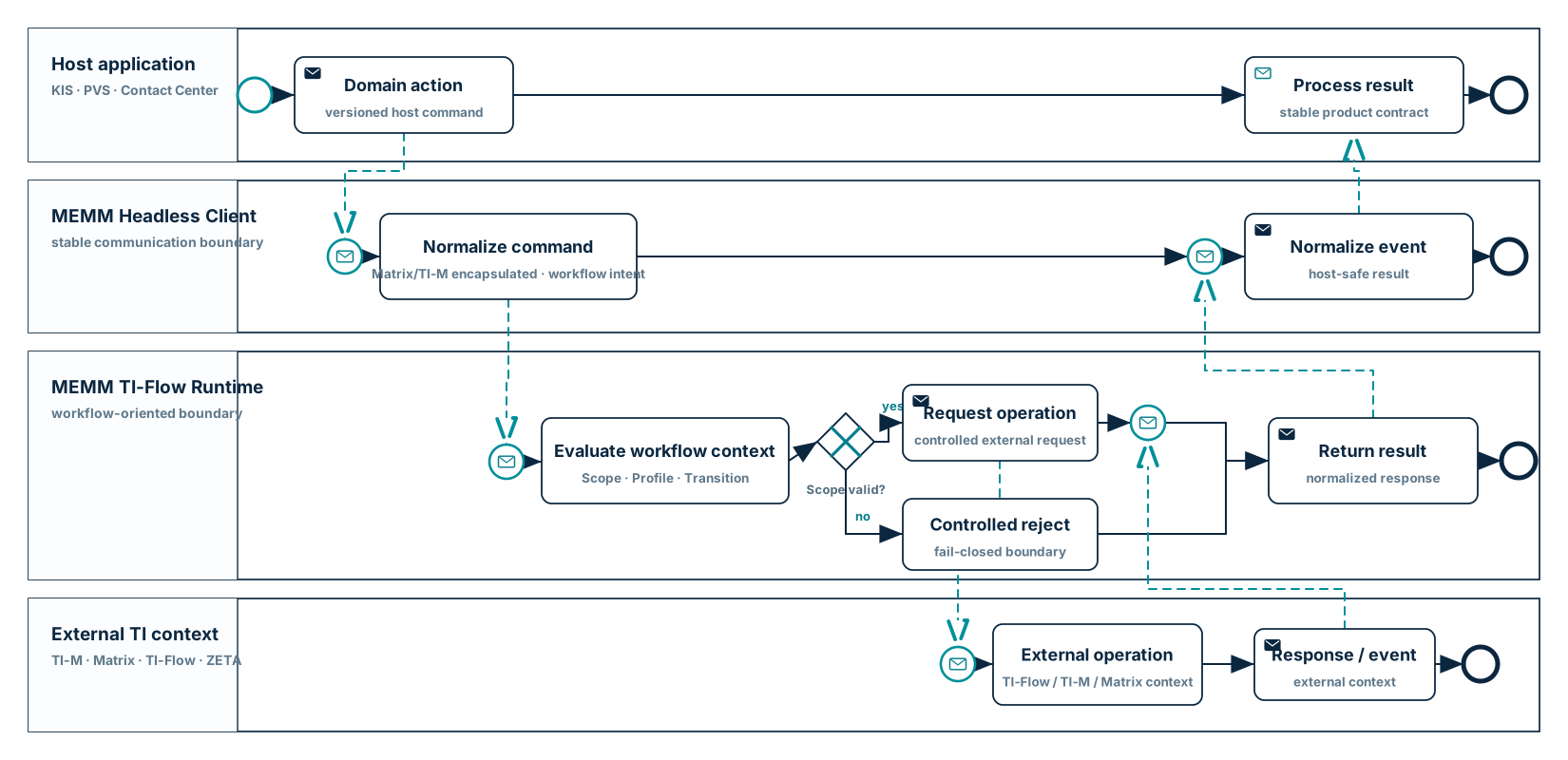
↔ Swipe horizontally to view the complete BPMN model.
Scope: architecture model for product boundaries. It does not claim a normative Headless/TI-Flow coupling or complete TI-Flow, HCC, ZETA or approval coverage.
$create and $activate as two separate BPMN interactions.The models use the publicly documented TI-Flow operations POST /Task/$create and POST /Task/<id>/$activate. The MEMM boundary remains an illustrative integration mapping; the external TI-Flow service is the normative reference context.
$create: create a task and return the Task ID.A dedicated request/response path runs from prescription context through the MEMM integration boundary to the service and returns the Task ID to the host contract.
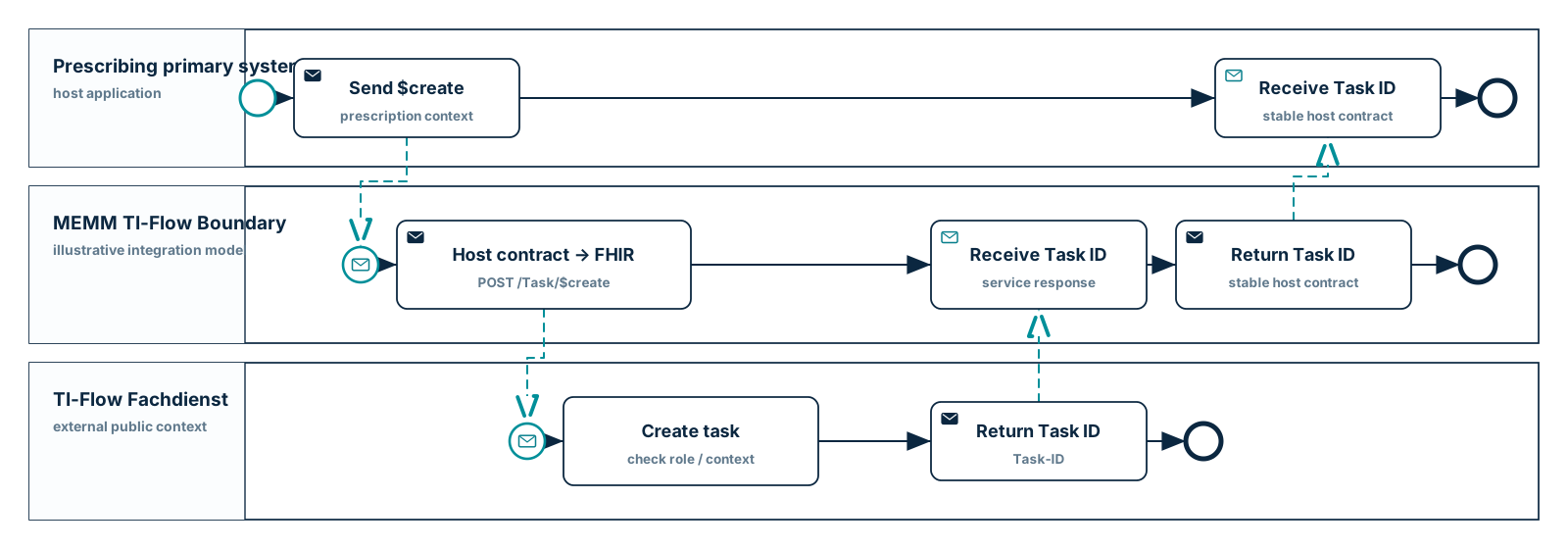
↔ Swipe horizontally to view the complete BPMN model.
$activate: activate an existing task with signed context.The second request/response path starts with the Task ID and signed data, carries the activation context and returns a Task or OperationOutcome.
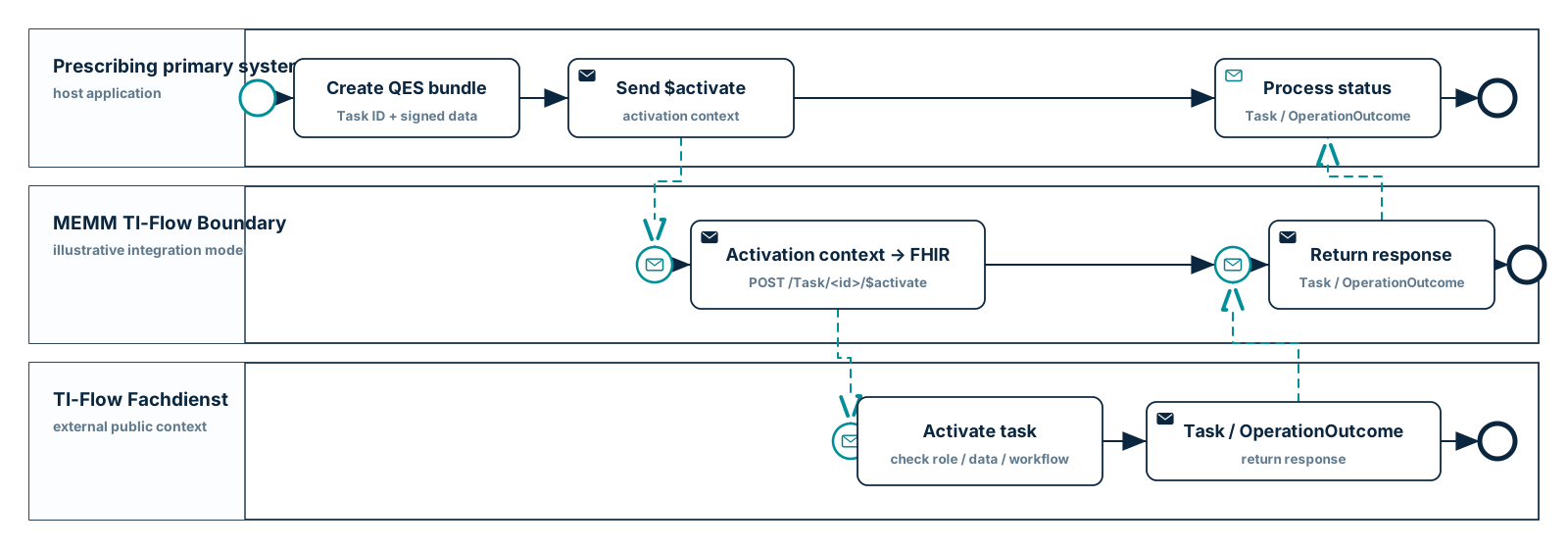
↔ Swipe horizontally to view the complete BPMN model.
BPMN semantics: $create and $activate are deliberately modelled as independent interactions. The Task ID from the first path is input context for the second; the model does not imply an automatic service-side transition. MEMM Headless remains a separate communication boundary.
An external delta is first classified and evaluated only against the product boundaries it actually affects. While the public host contract remains unchanged, adaptation stays inside the controlled MEMM boundary; an actual contract change creates explicit host impact.
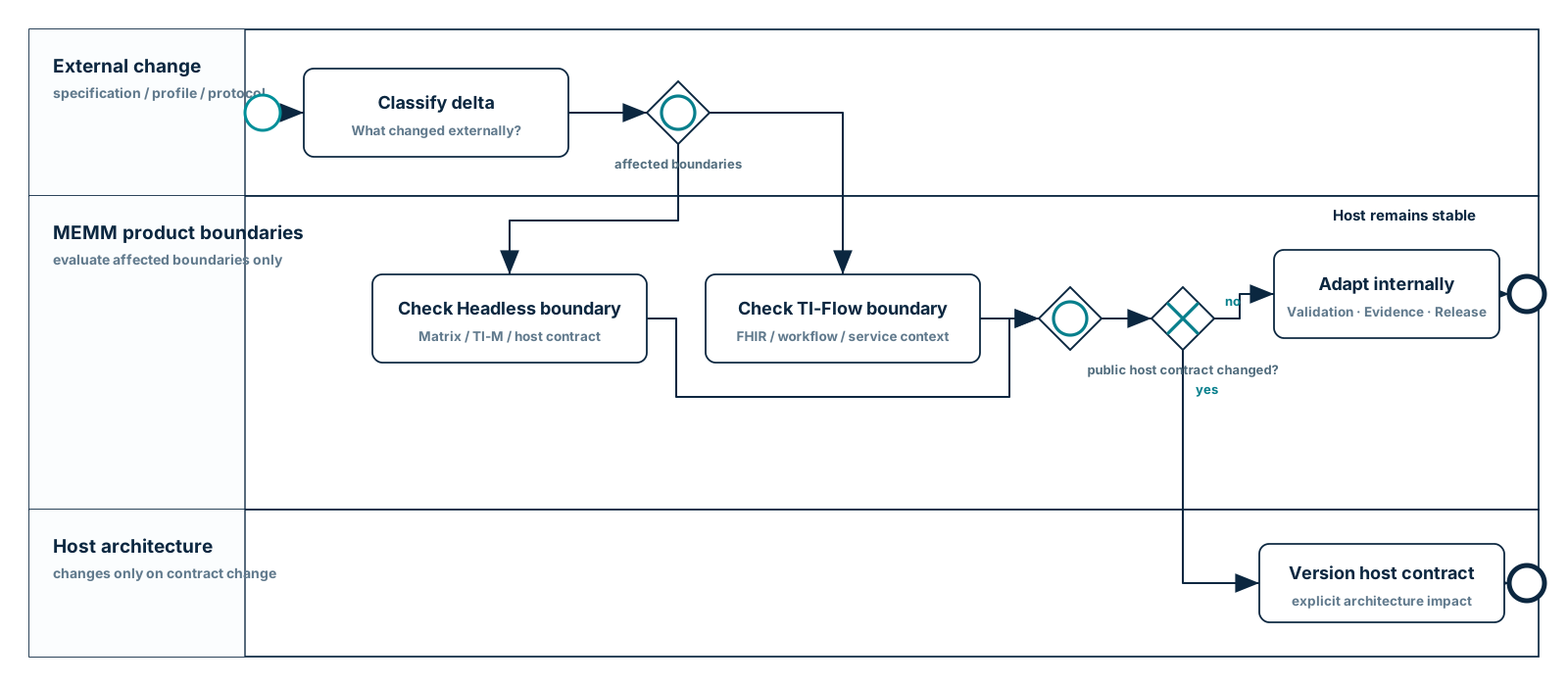
↔ Swipe horizontally to view the complete BPMN model.
Principle: not less regulation, but a bounded technical change surface. No claim of fewer approval steps or specific time/cost savings.
An ownership change is a controlled, verifiable operating action. The public description stays at responsibility, consistency and recovery level.
Ownership does not change as a silent side effect of infrastructure change.
An incomplete or contradictory transfer is not treated as a successful change.
Interruption remains a controlled recovery state and is not presented as a successful ownership change.
The 30 June 2026 gematik pre-release covers service concepts, HCC clusters, onboarding, product/provider profiles and multiple FHIR Implementation Guides. Those layers are not automatically derived from a BPMN/VBucket runtime.
The foundation requires an unambiguous execution boundary. The public description stays with that technical effect.
Contradictory or incomplete routing state is not treated as a normal execution path.
Execution requires a valid named ownership boundary.
Required business and security context stays bound to the execution decision.
ZETA remains external TI 2.0/TI-Flow context; complete ZETA validation or conformance is not claimed.
The view is synthetic. It does not show a real TI-Flow instance, gematik review or measured operating data.
Illustrative perspective on process state, technical execution and operating boundaries.
Separate FHIR/service contract, security/HCC context, workflow translation and the implemented runtime foundation against your target environment.